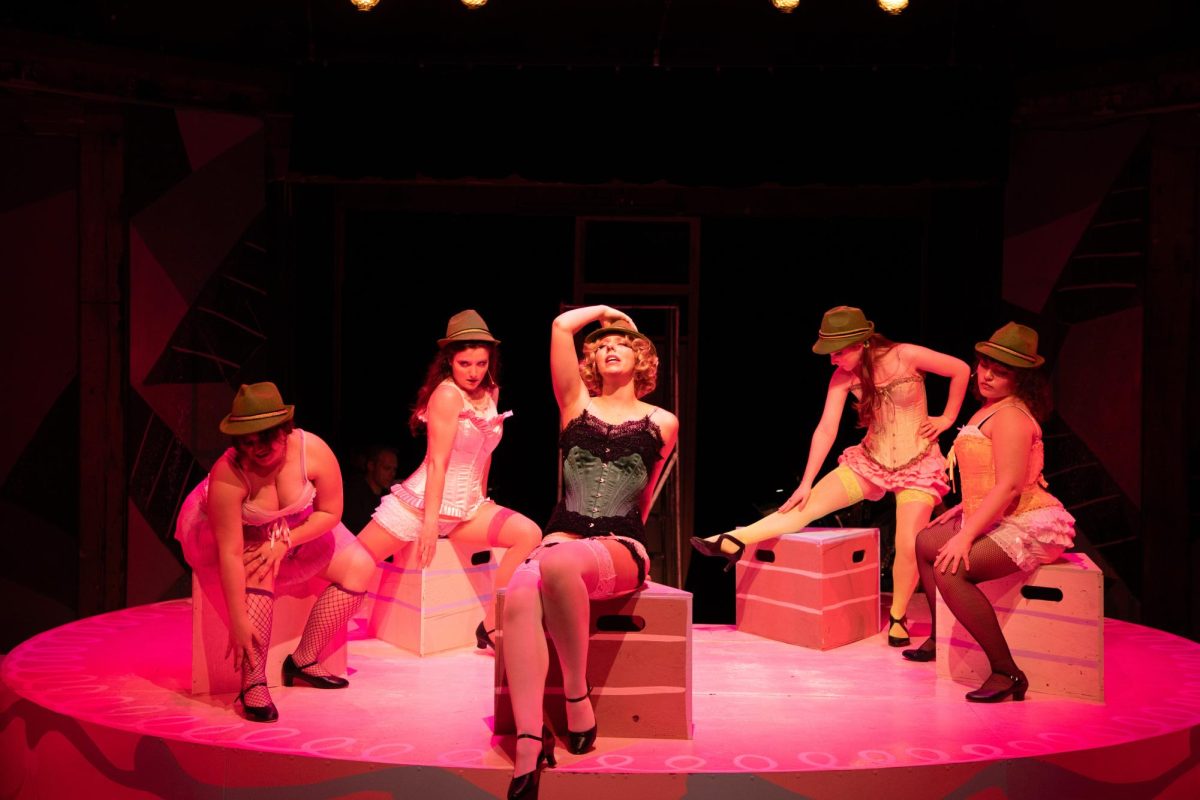
The Roger Williams University Stage Company wrapped up its weekend run of Cabaret, leaving audiences with a performance that was both entertaining and politically resonant.
Set in 1930s Berlin during the final days of the Weimar Republic, Cabaret follows American writer Cliff Bradshaw and performer Sally Bowles as their lives unfold inside the Kit Kat Klub. While the show features lively musical numbers and moments of humor, it is underscored by the gradual rise of Nazism and the social instability surrounding it.
This contrast between spectacle and political reality is central to the production’s impact. As the characters pursue personal freedom and escapism, the outside world becomes increasingly dangerous, highlighting how quickly democratic norms can erode when ignored or taken for granted.
Student performers, designers, and crew members worked for months to bring this tension to life through immersive staging, detailed costumes, and emotionally driven performances. Throughout the weekend, audiences filled the theater, responding to both the show’s energy and its heavier themes.
The musical raises questions about political complacency, the role of art in times of crisis, and how ordinary people respond to growing extremism.
As the curtain closed on the final performance, the Stage Company’s production left audiences with more than just memorable songs; it offered a reminder of the consequences of ignoring political change until it is too late.