Juniors may not be moving off campus after all: RWU is considering a three-year residency requirement, administrators told Student Senate at its November 10th meeting. A final decision according to Assistant Vice President for Student Life Derek Zuckerman could come “in the next couple of months,” and—if adopted—would apply to the next incoming class, not current students.
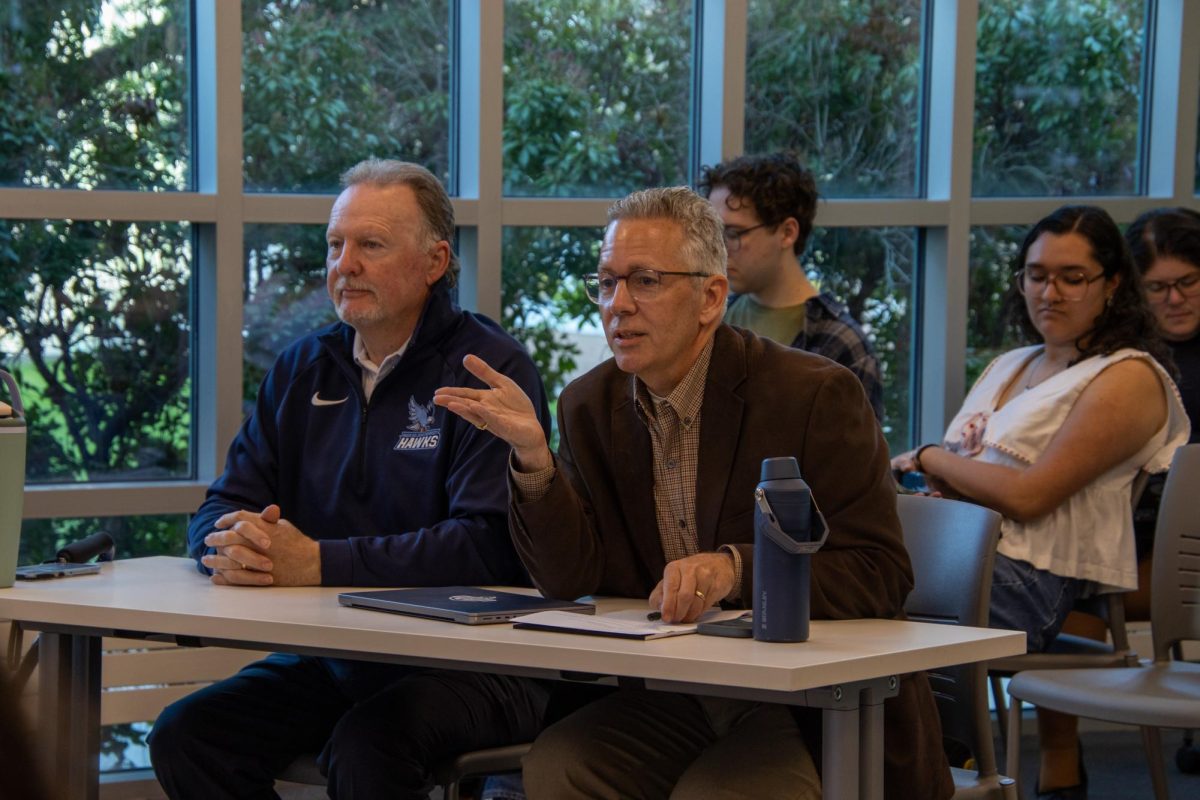
Associate Vice President for Student Life & Dean of Student John King alongside Derek Zuckerman said the goal is to strengthen RWU’s residential culture, boost sophomore-to-junior retention, and to respond to concerns from Bristol officials about housing stock. “We talk often about the importance of being a tight-knit residential community,” Zuckerman said, noting that students who live on campus are more connected to RWU’s resources and support.
Administrators cited comparisons with nearby institutions—such as Providence College and Brown University—that already mandate students to live on campus for three years, as well as “incidents in the community” that occur each semester. Some Bristol Town Council members are considering whether student rentals are constraining the local housing market, particularly for young residents and staff who want to live in town.
Exceptions available to current students—commuter status within roughly 40 miles, active military service, and other case-by-case factors—would carry over to the three-year policy. Beyond those, RWU would open an additional lottery to grant off-campus permissions each year so students can earn a right to live off campus.
RWU would also rebalance who lives where. Sophomores would be steered toward suites on the main campus, while upper classmen would be encouraged to take apartment-style options such as the Almeida housing. Housing selection could shift from picking individual rooms to filling full suites or apartments as a group.
Administrators pushed back on the idea of a housing “shortage,” citing RWU currently has 180 vacant beds even after the university closed Baypoint. They also argued that once utilities, internet, food, and other costs are factored in, the “true cost” of off-campus living may be closer to on-campus costs than students assume.