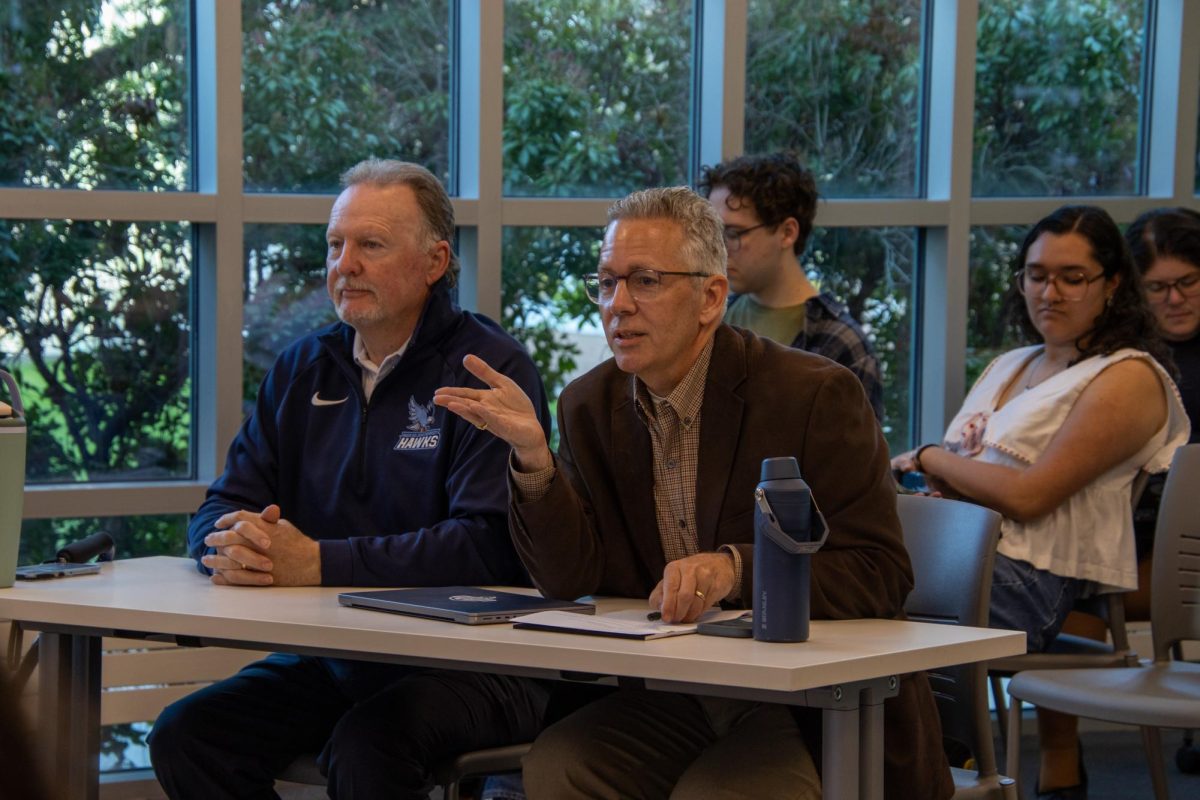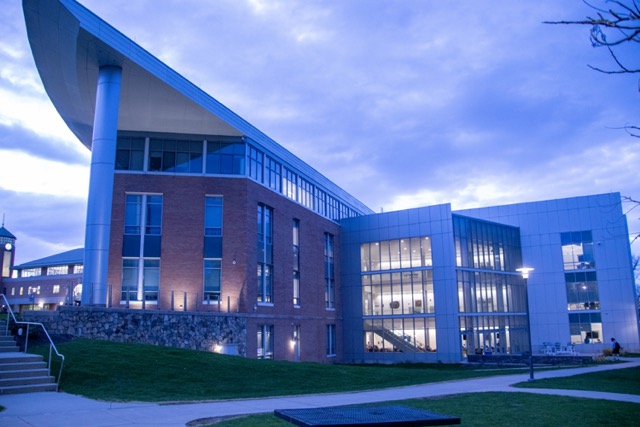
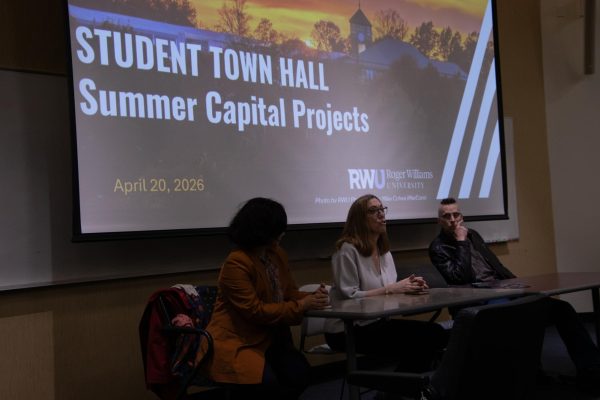
On Monday, April 20, the RWU Student Senate hosted a Town Hall meeting to discuss the upcoming switch of Global Heritage Hall (GHH) and the Gabelli School of Business (GSB). Students, faculty, staff, and senators attended a presentation by the Provost Margaret Everett and the Executive Vice President for Finance and Administration and Chief Financial Officer Gloria M. Arcia. Following the presentation, a Q&A session opened with the presenters and the Dean of GSB, Diya Das, and the Dean of the School of Humanities, Arts, and Education (SHAE), Jeffrey Meriwether.
The Town Hall meeting started with an introduction of the panelists by the Student Body President, Henry Siravo. Everett started off the presentation by giving a list of all the upcoming projects being covered by the CapEx fund. The CapEx fund is a set amount of money the university has designated for architectural and physical changes to be made on campus. This year’s CapEx fund is set at $9.8 million, which, according to Everett, is being split into six projects. The upcoming projects include the transition and renovation of the old engineering building, upgrades to the Fine Arts Building (the Muffin), the switch of GSB and GHH, the classroom master plan, and a study into Cedar residence hall.
The current plan is for the humanities classes to be moved into the current GSB building, and all the business classes to be moved into the current GHH building. With the switch comes new names for the buildings. GHH will likely become the Gabelli School of Business, though not confirmed, and the GSB building is currently unnamed, Everett said.
The development of GHH is currently planned, including updates to the atrium, design thinking studio, the boardroom (GHH 200), and the exterior. Also, the CAFE and Stoico Computer Lab plan to move into GHH. Updates to GSB will include the lobby, general classroom updates, and exterior updates. GSB is also planning to have designated classrooms for the newsroom, an art gallery, and graphic design studios.
Other changes across campus this summer include updates to the old engineering building, upgrades to the Muffin, and the start of a study into Cedar Hall. The old engineering building will be moving into phase four of its renovation, including the environmental sciences lab, general classroom upgrades, research rooms, a cyber lab, and upgrades to the second-floor corridors and restrooms. The Muffin will get HVAC installed and an interior and exterior paint job. Finally, Cedar residence hall will begin a study into making renovations to the entry and study rooms. Both Everett and Arcia spoke about these projects, and they were listed in the slideshow presentation shown.
After the presentations, the panelists opened to questions from the audience.
Attendees suggested more communication around the GHH and GSB swap, including email updates over the summer and having opportunities for students to give input into the designs and renovations.
Student Senate Parliamentarian, Olivia Rynne, asked about their progress in finding a general contractor. Arcia answered that they are currently working on securing bids. Arcia stated that the following day, Tuesday, April 21, a variety of general contractors will come to campus, walk around, and bid for the contract.
Additional aspects revealed about the renovations include improving the walkway and green space between the GSB building and Muffin, moving the heritage classrooms and artifacts from GHH to GSB, and more. Questions surrounding the funding of these renovations were asked. Arcia also spoke about how the sale of Baypoint, the CapEx fund, and a million-dollar anonymous donation are all part of the renovation money.
Overall, the switch between GHH and GSB is intended to better support the students within SHAE and the School of Business. According to the panelists, GHH is bigger and therefore better suited for the growing population within the School of Business. Whereas GSB is smaller, and with the new renovations, it will be better suited for the students within SHAE. These renovations will begin over the summer, with most classrooms being switched by the fall and other renovations and swaps progressing over the next few years.